-

Liberia Animal Welfare & Conservation Society became a registered member 10 years, 11 months ago
-
Beverly Pervan (CACH)'s profile was updated 10 years, 11 months ago
-
frank curtis's profile was updated 10 years, 11 months ago
-
frank curtis became a registered member 10 years, 11 months ago
-

Kim Bartlett wrote a new post, VIDEO: Cows drowned at sea, victims of live export 10 years, 11 months ago
A Lebanese ship carrying 5,000 cows capsized and sunk pier side at Vila do Conde port in Barcarena, Para state, Brazil on 10/6/2015.
-

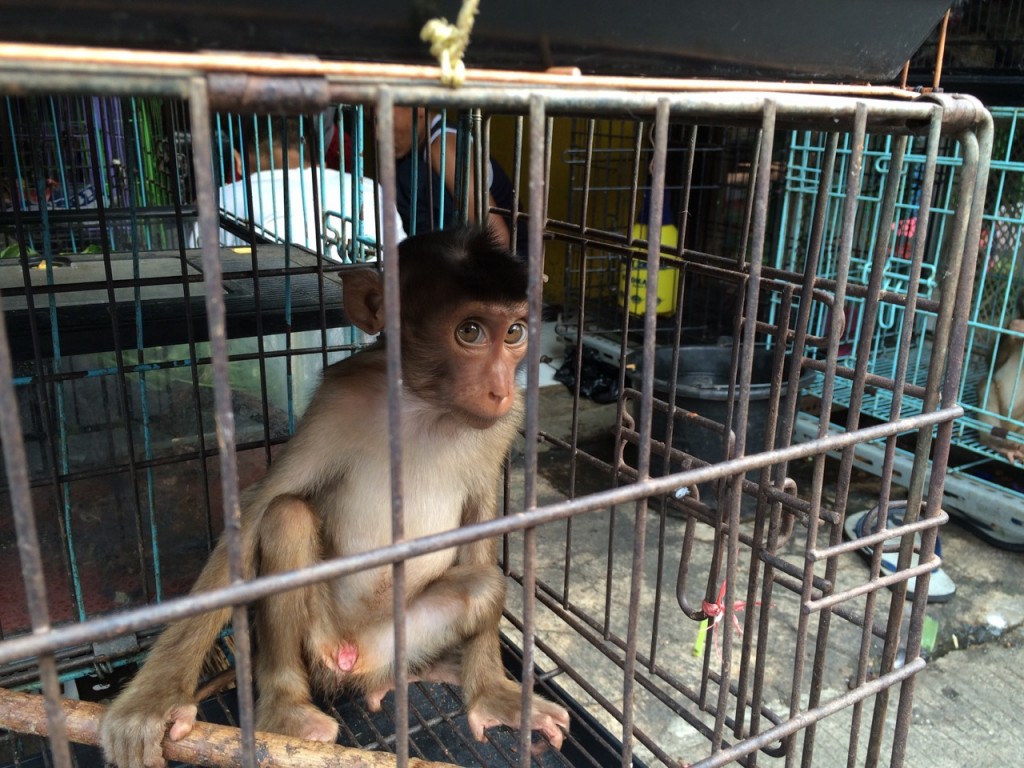
Wolf Gordon Clifton wrote a new post, Markets of the Damned: Wildlife For Sale in Indonesia 10 years, 11 months ago
Recently I returned from nearly three weeks of travel in southeast Asia, visiting a range of animal-related projects in Indonesia and then attending the 2015 Asia for Animals conference in Kuching, Malaysia. I […]
-
This report by Wolf Clifton simply took my breath away. A veritable tour de force!
The sheer scope of this infernal situation all over Indonesia and similar nations condemned to endemic chaos and exploitation by Western enterprises allied with local, corrupt big shots, all compounded with extremes of poverty and cultural attitudes enforced by the worst of this civilization , not the best, spell out indefinite horrors for helpless animals that few Western activists can comprehend—but should.
I have traveled in the East myself a number of times, from India to Thailand, Vietnam, etc., and Indonesia is easily one of the worst, perhaps THE worst.
This report should be widely read, and I hope more activists will share it. I certainly will. I also do hope Mr Clifton will also consider a book about these experiences in the near future. Even a serial work, in eBook format, would be of great advantage to the animal community.
Incidentally, for those with a strong stomach and stronger heart I recommend a visit to a recent dispatch from world renowned correspondents Andre Vltchek who knows Indonesia extremely well, lived there for a while, and has written extensively about that culture. His essay explains in some measure why such things happen, what are the hidden roots of this distressing state of affairs.
Horrid Carcass of Indonesia – 50 Years After the Coup
-
Branford, thank you for your words of support! I hope that this article and photographs will be widely circulated, to raise awareness of Indonesia’s wildlife trafficking epidemic and support efforts by Indonesian and international activists to end it.
For the record, I want to state my strong disagreement with several points in Andre Vltchek’s portrayal of Indonesia. I respect his extensive personal experience with Indonesian history, including his acquaintance with figures like Pramoedya Toer. I can’t speak personally to what Indonesia was like decades ago, but compared to what I saw of Jakarta seven years ago, in 2008, I actually believe Indonesia is starting to improve. Between my last visit and this one, Jakarta has progressed from the foulest, most polluted city I’ve ever visited to one relatively clean by developing world standards. The current national government has begun cracking down on the country’s infamous corruption, to the relief of everyone I spoke to while there, and the last few years have seen several major political breakthroughs for animal welfare.
I most strongly object to Vltchek’s extremely negative characterization of Indonesian people today, especially those of younger generations. During my trip I met many dedicated Indonesian animal activists, some of whom regularly risk life and limb opposing powerful enemies, as well as compassionate citizens highly receptive to animal welfare – most of whom were in their 20s and 30s. Despite the horror of atrocities like the wildlife markets, and the country’s bloody history, the many good people I met there, transformation of Jakarta, and positive political developments left me with an overall strong sense of hope for Indonesia’s future.
For more detailed treatments both of Indonesia’s problems and the individuals and groups working to solve them, check out my “Archipelago Animal Adventures” series here on the AP Forum:
Winds of Change Along the Java Sea: Archipelago Animal Adventures, Days 1-2
Escape From Raptor Island: Archipelago Animal Adventures, Day 3
Night of the Fire Face: Archipelago Animal Adventures, Days 4-5
(three more entries currently in development)
-
-
-
changed their profile picture 10 years, 11 months ago
-

jon hochschartner wrote a new post, How I Learned To Hate Animals 10 years, 11 months ago
OCTOBER 2, 2015 • ( LEAVE A COMMENT )
By Jon Hochschartnerow are we socialized into accepting systematic violence against animals? Like anything else, I think we learn the rationales for non-human expl […]
-
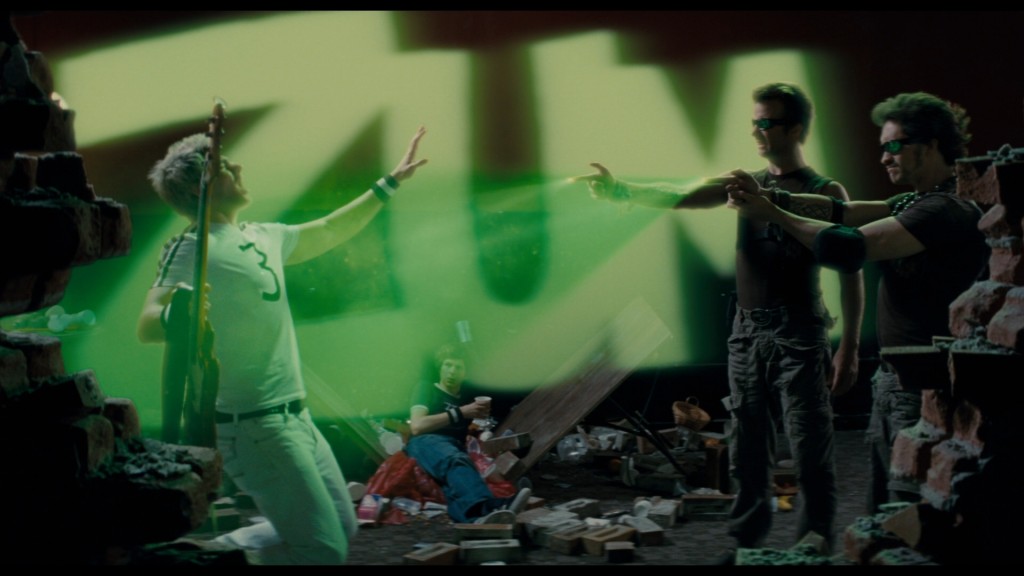
Wolf Gordon Clifton wrote a new post, The Scott Pilgrim Parable for Vegan Activists 10 years, 11 months ago
The 2010 film Scott Pilgrim vs. the World stands out as an exceptional action comedy, with a perfect mix of exhilarating, self-consciously overblown battle scenes, wacky humor, and a nuanced, surprisingly […]
-
In my personal experience in diet transition I come to face the challenges that are, from the easiest to the hardest ( arguably) :
Firstly comes from my internal self, as in the process to internally accepting the new diet requirement and appetite management. In my experience, including welcoming new tastes and numb out the taste I am used to consider as appetising, including getting the body used to operate with the new type of food.
Secondly from the external environment a.k.a the people. The new diet brings challenges as it affects one’s social dynamic. Having a different diet than most people means we require others that we interact with to comply with our diet requirement. To note that food plays a highly important role on how we socialise ( business lunch, dinner date, family dinner, etc.) – For almost all people, food plays three times a day and it is often shared, is considered an enjoyable experience and is a together type of activity, making it a perfect tool to bond. By having different type of diet we are putting a strain on the group dynamics. Most people are not happy and this may lead to different type of social issue as shaming and bullying, for instance.
The third challenge comes from the system in the society we live in that is often not accommodating to a vegan/vegetarian diet. This might be easier in a country like India where vegetarianism is recognised, is widely accepted and become an element of consideration, and thus vegetarianism is accommodated within the system in the Indian society. The challenge occurs when the different type of diet is required within a society where the concept of vegan/vegetarianism is alien. To practice the alien diet means the absence of common privilege that comes along with the practicality value within the already established system. To swim against the current means daily (!) extra effort for an often overlooked simple act and this is a special kind of daily (!) strain by itself. As an illustration that it is comparable to a requirement upon a task completion for being mobile on the road but the person is sitting in a wheelchair and thus needing a customised car to ride, but the widely available commercial car had not taken the wheel chair situation into consideration and thus the particular need is not accommodated. The options is not having the task completed or the car is required to be customised, and in this case its a daily customisation.
By understanding the layers of challenges; and in accordance with the conclusion in the article above.
Firstly, it is important to keep in mind that the impact for the animals comes with the volume thus it is less on the personal purity and to remember that it is the positive reinforcement that works ( I know this is frustrating but unfortunately human being – good or bad – are protected by the law and to win their commitment, we need them to agree with the proposal so we cant afford to make them upset as not everyone is able to differentiate between the ethics value and the person behind it) .
Secondly, it is not realistic to put all the pressure on the aspiring individual in the expectation to convert and retain with the movement, but rather it is important to encourage the environment ( people) and the society ( system ) to be more accepting and accommodating ( respectively ) to vegetarian/ vegan diet, which these would establish a more vegetarian/vegan friendly environment that eventually would attract , win and retain more followers for an impactful result by the volume.
I find this interesting article in accordance to the proposal making here : Which Proposal Is The Most Effective To Change A Diet: Veganism, Vegetarianism, Eating Less Meat, Or Cutting Out Or Cutting Back On The Consumption Of Animal Products?
http://www.animalequality.net/node/750
-
-
Wolf Gordon Clifton and
Catherine Besch are now friends 10 years, 11 months ago
-
Catherine Besch's profile was updated 10 years, 11 months ago
-
Aniqa Shams Wendy and
Wolf Gordon Clifton are now friends 10 years, 11 months ago -
Catherine Besch became a registered member 10 years, 11 months ago
-
Aniqa Shams Wendy's profile was updated 10 years, 11 months ago
-
Aniqa Shams Wendy became a registered member 10 years, 11 months ago
-
siddha108 became a registered member 10 years, 11 months ago
-

Varda Mehrotra, FIAPO became a registered member 10 years, 11 months ago
-
Wolf Gordon Clifton and
Joyce Pollack are now friends 10 years, 11 months ago
-
M.L. Sicoli's profile was updated 10 years, 11 months ago
-
Karen Jap became a registered member 10 years, 11 months ago
- Load More