-
 Wolf Gordon Clifton posted an update 10 years, 8 months ago
“Welfare-driven conservation” of the endangered Scottish wildcat: https://www.thedodo.com/scottish-wildcat-endangered-1548912260.html?utm_source=The+Dodo+Newsletter&utm_campaign=0011219654-01_13_2016_NL&utm_medium=email&utm_term=0_4342b46fc5-0011219654-142312137
 There Are Only 35 Of These Fierce Little Animals Left In The WorldFor the love of animals. Pass it on.
-
Wolf Gordon Clifton posted an update 10 years, 8 months ago
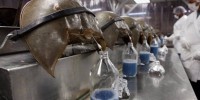 U.S. Food and Drug Administration: Horseshoe Crabs are important, stop bleeding them dry: Find the Solution to Synthetic LAL Now!I am known on Tumblr for my post about the importance of the Atlantic horseshoe crab--100,000+ shares strong. But the importance of these incredible creatures cannot be captured in a few words on a social media website. The Atlantic horseshoe crab (Limulus Polyphemus) is considered by scientists to be a "living fossil," it is one of the only organisms that has survived without evolving since the age of the dinosaurs, 450 million years ago. They are also known as helmet crabs, and they are actually not all that closely related to crabs at all--they are genetically more closely related to spiders and scorpions, and they crawl around the surface of the ocean when they're not spawning on the shores of the East coast--most prominently on the Jersey Shore, Long Island, and Delaware, and even in the Gulf of Mexico. Aside from their entire existence and history being prehistoric, so are their immune systems! Horseshoe crabs bleed blue (no, literally) because their blood is mostly made of copper--unlike that of humans--our blood is composed mostly of Iron. Their blood, along with their really neat prehistoric immune system, contains a substance called LAL (Limulus amebocyte lysate), which coagulates around endotoxins and bacteria, detecting their presence. Since 1970, every pill, medical instrument or other tool used and approved by the U.S. Food and Drug Administration has undergone testing using horseshoe crab blood, which costs around $15,000 per quart. These critters are super important to our health, but what about their health? When we extract their blood, we take around 1/3 of their blood cell count, and due to the old-fashioned nature of their circulatory system, it can take around 6 months for a single horseshoe crab to restore itself to its normal blood cell count levels. During the process of their "donation" to American medicine, it is estimated that 18% of horseshoe crabs die from blood loss and other complications related to the extraction process. While it is technically illegal to bleed the same crab twice (which is why they are often tagged by medical companies, to ensure that they don't re-collect that same crab,) it is still cruel to be taking these animals away from their homes and habitats, bleeding them out and leaving them to re-adjust their blood cell count. Their prehistoric immune systems and body processes cannot handle this, and because of this, their population remains in great danger. Our scientific research and advancements in technology could certainly afford to find a synthetic solution to LAL. The health industry knows the chemical composition of horseshoe crab blood, so why can't they make a synthetic version? If they can afford dozens of quarts of copper-based blue blood, they can afford a synthetic alternative to bleeding these friendly, awesome creatures dry. I am urging you to sign this petition to ask the FDA and the EPA to work together to minimize the amount of horseshoe crabs who are bled annually, and to work more quickly and efficiently toward finding a synthetic alternative to horseshoe crab blood/LAL. Horseshoe crabs are not only a really cool connection to our prehistoric past, but they are friendly and wonderful animals who contribute great things to our aquatic ecosystems. For more information, please visit the sources below. Sign and share! Thank you, Caitlin O'Connor Sources: http://www.pbs.org/wnet/nature/crash-a-tale-of-two-species-the-benefits-of-blue-blood/595/ http://www.cnn.com/2014/09/04/health/this-crabs-blood-could-save-your-life/ http://www.ncbi.nlm.nih.gov/pubmed/20593268 http://www.horseshoecrab.org/med/med.html
-
Sally Socia posted an update 10 years, 8 months ago
Thank goodness that I tried again to find you! Without “Animal People” in my life there was no balance. You had just disappeared.
- 2 people like this.
-
Thank you for your support, Sally! It’s been a very difficult and eventful two years, but we made it through all our troubles and remain firmly committed to spreading knowledge on behalf of animals and the people who defend them. You can read more about our journey and the services we now offer through the Animal People Forum at…[Read more]
-
Sally Socia became a registered member 10 years, 8 months ago
-
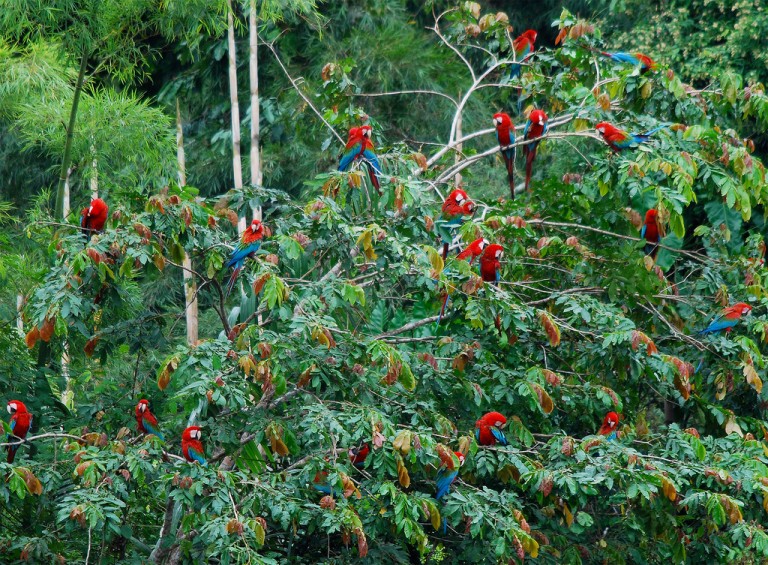
Mary de La Valette wrote a new post, POETRY: Rapture 10 years, 8 months ago
(Photo credit: Billtacular, used under CC BY-NC-ND 2.0)
-
Anita Mayangpuspa posted an update 10 years, 8 months ago
DAVID Bowie is being hailed as the ultimate animal hero after allowing one of his classics to become the battle hymn of whaling protestors. http://www.express.co.uk/news/nature/633817/David-Bowie-heroes-animal-hero-Taiji-dolphin-slaughter-The-Cove
 David Bowie hailed as 'ULTIMATE animal hero' for support of illegal whaling protestorsDAVID Bowie is being hailed as the ultimate animal hero after allowing one of his classics to become the battle hymn of whaling protestors.
-
Anita Mayangpuspa posted an update 10 years, 8 months ago
According to a Canadian news source, factory farms “can’t find enough Canadians willing to work on the kill floor” and that new workers “walk away after a couple of hours.” http://vegnews.com/articles/page.do?pageId=7378&catId=1
 Canadians Refuse to Work at SlaughterhousesMeat production facilities report a shortage of Canadian workers applying to work on the kill floor.
-
Anita Mayangpuspa posted an update 10 years, 8 months ago
Monofilament lines and nets kills our Ocean: On Saturday morning, a dead juvenile green turtle was found dead and entangled in a fishing net near Pui O Wan on the south of Lantau Island.
http://hongkong.coconuts.co/2016/01/11/young-sea-turtle-found-dead-and-entangled-fishing-net-south-lantau-island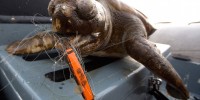 Young sea turtle found dead and entangled in fishing net south of Lantau IslandOn Saturday morning, a dead juvenile green turtle was found dead and entangled in a fishing net near Pui O Wan on the south of Lantau Island.
-
Anita Mayangpuspa posted an update 10 years, 8 months ago
http://hongkong.coconuts.co/2016/01/11/hong-kong-stall-owner-stopped-selling-dog-furs
 Hong Kong stall owner stopped from selling dog fursThe stall owner apparently claimed the furs were from Tibetan mastiffs raised in Beijing.
-
Anita Mayangpuspa posted an update 10 years, 8 months ago
The report adds that “animal products cause more damage than [producing] construction minerals such as sand or cement, plastics or metals.” Plus, livestock raised for meat consumes a large portion of the world’s crops and a lot of freshwater. Currently, agriculture, “particularly meat and dairy products,” account for 70 percent of the world’s…[Read more]
-
Anita Mayangpuspa posted an update 10 years, 8 months ago
5 minutes of touching wisdom from Jane Goodall. Its gonna worth your 5 minutes more than anything else. Of course she is the wisest of all (-1.30) , but one thing strucks me most is she actually enjoys her time on earth (-4.30) . With all those knowledge she bears, she enjoys her time and she wants more. That is insane.…[Read more]
-
Anne Lindsay became a registered member 10 years, 8 months ago
-
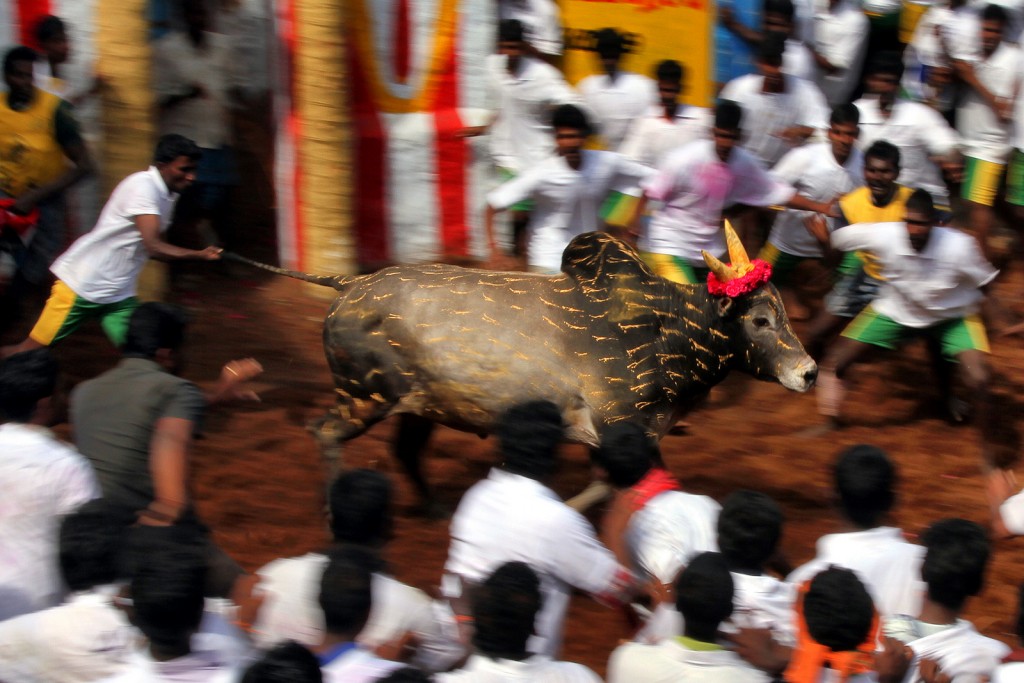
Rudra Krishna wrote a new post, Legalizing Jallikattu is Unconstitutional and a Betrayal of Values 10 years, 8 months ago
(Photo credit: Vinoth Chandar, used under CC BY 2.0)
I was horrified to read Friday that Prakash Javadekar, the Union Minister of State for Environment, Forests, and Climate Change, had decided to ignore the […]
-
I don’t know where you get the impression that animal activists don’t oppose killing of animals for the meat industry. Combating the meat industry – by exposing abuse in slaughterhouses, advocating vegetarianism and veganism, and lobbying for tighter legal regulations – is one of the top priorities for the animal rights movement worldwide, and while not all self-professed animal activists are vegetarian a great many are, or are at least trying to give up meat. However, legally banning it isn’t practically feasible so long as the majority of people in most countries eat meat and animal agriculture companies remain politically powerful. If meat-eating can ever be outlawed, it won’t be for a very long time, until the majority of people have willingly chosen vegetarianism for themselves. Should activists not try to achieve any other good for animals in the decades or centuries between now and then? With regard to sports like jallikattu, or rodeo in my own country (United States), yes it’s true that the level of cruelty and number of animals harmed is far less than in the meat industry. However, it’s hard to imagine that most people will oppose killing animals for food behind closed doors if they’re okay with tormenting them for fun in public; public forms of animal cruelty are therefore important to combat because they set the floor for what’s considered socially acceptable to do to animals and why.
All that said, we are at least in agreement that people who claim to care about animals shouldn’t eat them. I know for a fact that Rudra Krishna, the author of this piece, is vegan. Many of the other authors featured on the Animal People Forum are also vegetarian or vegan, including myself, and our organization Animal People specifically endorses vegetarianism.
-
-
Dick Reed became a registered member 10 years, 8 months ago
-
Anita Mayangpuspa posted an update 10 years, 8 months ago
Cat: different look, different attitude http://www.veterinarypracticenews.com/veterinarians-study-cat-coat-patterns-discover-attitute-in-certain-cats-trending/
 Veterinarians Study Cat Coat Patterns, Discover Attitude in Certain CatsA new study showed that cats with tortoiseshell and calico coat patterns challenge their owners more often than cats with other coat patterns.
-
Anita Mayangpuspa posted an update 10 years, 8 months ago
Issues to consider surrounding the TNR practice: https://www.facebook.com/notes/animal-people-inc/trap-neuter-return-projects-may-bring-conflicts-over-euthanasia-by-kim-bartlett/959742070714880
-
Anita Mayangpuspa posted an update 10 years, 8 months ago
Jonathan: We also want the journal to have a strong emphasis on the application of our understanding of animal sentience to advances in human-animal relationships. To that end, we will not publish studies that harm animal subjects; and where animals are studied, we encourage authors to use rewards as positive motivators, and not punishments or…[Read more]
 The Science of Sentience: An Interview about Animal FeelingsAnimal sentience is everywhere and a new journal shows just how widespread it is
-
Anita Mayangpuspa posted an update 10 years, 8 months ago
As Americans continue turning away from milk, an industry group is pushing back at its critics with a social media campaign trumpeting the benefits of milk. The association says it needs to act because attitudes about milk are deteriorating more rapidly, with vegan groups, non-dairy competitors and other perceived enemies getting louder online.…[Read more]
 Milk industry fights back against vegan groups, 'anti-dairy folks'Total milk sales volume has declined 12 percent since 2009. One factor chipping away at milk's dominance is the growth of non-dairy alternatives.
-
I’ve been seeing commercials for a pro-dairy website called uddertruth.org on YouTube, but it seems to be a different campaign from this one. Glad the industry is finally having to play defense!
-
-
Anita Mayangpuspa posted an update 10 years, 8 months ago
Any animals currently in captivity that would not survive in the wild will be cared for in rescue centers and wildlife sanctuaries. No new zoos will be opened. http://www.higherperspectives.com/costa-rica-is-shutting-down-all-zoos-and-freeing-every-animal-in-capti-1429975510.html
 Costa Rica Is Shutting Down All Zoos And Freeing Every Animal In CaptivityCosta Rica has announced that it will be the first country in the world to shut down its zoos and free the captive animals they hold. Costa Rica is an especially biodiverse country, holding about 4% of the world's known species. Sadly, the country is contractually obligated to keep two of its zoos o...
-
Kathy became a registered member 10 years, 8 months ago
- Load More



